
An assistive technology innovation framework shows teams what to fix first. More than 2.5 billion people need an assistive product, says the WHO and UNICEF Global Report on Assistive Technology. Nearly one billion of them are denied access. A good framework explains why. This article looks at the 5Ps that the AT Innovation Wiki uses and what they reveal in Southern Africa.
What Is an Assistive Technology Innovation Framework? A Plain Answer
WHO calls assistive technology an umbrella term for assistive products and their related systems and services. An assistive technology innovation framework is a map of those parts. It shows what must work for a device to help a person. Without a map, teams fix the device and miss the rest. The AT Innovation Wiki uses the 5Ps. These are people, products, provision, professionals and policies.
Why an Assistive Technology Innovation Framework Beats a Device-First View
Many people picture robots and smart canes. A sturdy wheelchair frame that a local welder can mend is also innovation. So is a training course for repair staff. The test is simple. Does the change work for the user in daily life? A framework keeps that test in view.
The Costly Gap an Assistive Technology Innovation Framework Must Explain
WHO expects the number of people who need assistive products to reach about 3.5 billion by 2050. Access varies sharply, according to the WHO fact sheet on assistive technology. In some low-income countries, as few as 3% of people report access to the products they need. In some high-income countries, the figure is 90%. In 2018, WHO member states adopted resolution WHA71.8 to improve access. Our report on the UN resolution on assistive technology covers that global push.
Price is one barrier. Others are just as real. Products can be hard to find, badly fitted or too hard to repair. Staff may lack training. Budgets often leave assistive products out. Each problem sits in a different part of the map.
What the Assistive Technology Innovation Framework Shows in Malawi
Doctoral research on assistive technology ecosystems in Southern Africa studied three areas in Malawi. These were mobility, albinism and digital tools. Support after delivery was weak in all three. In the mobility group, five of six users reported poor training and few repair services. People often received devices without learning to use or care for them. That led users to drop the devices.
Four Proven Layers Inside an Assistive Technology Innovation Framework
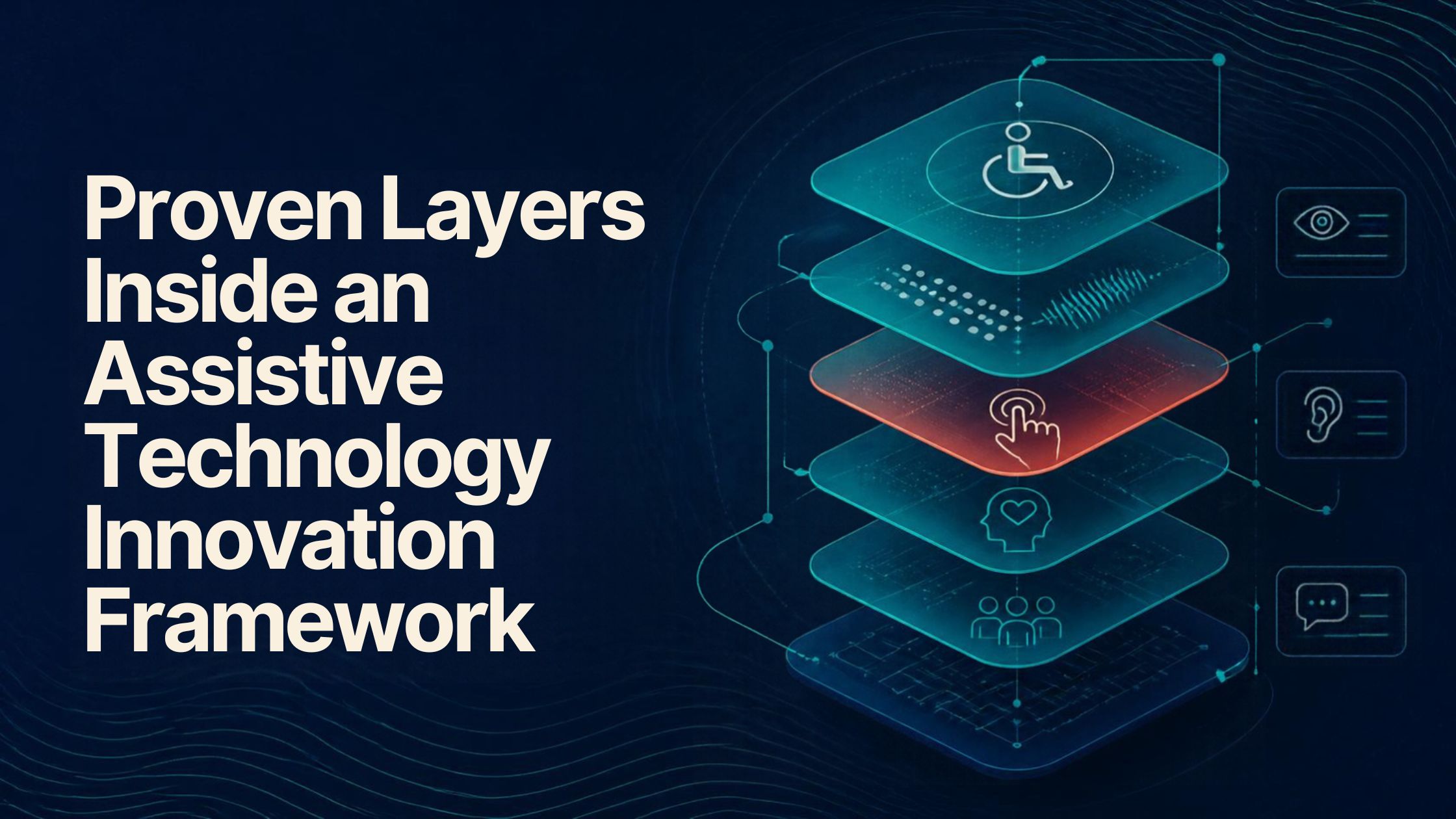
Innovation shows up in four layers. These are products, services, policy and systems. Each one matters. The best results come when they work together.
Product Layer of the Assistive Technology Innovation Framework
Product work focuses on the device. Locally made wheelchairs can suit rough roads and use parts found nearby. Phone features such as screen readers and captions turn a low-cost handset into a daily aid. Our piece on prosthetic access in Africa looks at the costs of AI in prosthetic care.
Service Layer of the Assistive Technology Innovation Framework
Service work changes how people get and keep a device. Mobile clinics and community health workers can fit, train and follow up. The thesis found that local phone shops and community health workers help deliver software and basic setup for digital tools. They bridge gaps in remote areas, but their resources are thin.
Policy Layer of the Assistive Technology Innovation Framework
Policy decides who pays. Malawi set up a Disability Trust Fund under its Persons with Disabilities Act. The thesis argues that grant rules should set aside money for user training, repairs and follow-up. Current funding centres on buying devices. That can push groups to chase high delivery numbers while support shrinks.
System Layer of the Assistive Technology Innovation Framework
System work links the parts. The thesis describes Malawi’s network as spread out, with no single leader. Government ministries and service providers sit at its centre. Better links between clinics, workshops, schools and funders would help each product reach the people who need it.
Why the 5Ps Make an Assistive Technology Innovation Framework Work
The 5Ps tie every layer together. A strong product fails when provision is weak. A good policy fails when too few trained professionals exist.
Donor dependency is a core weakness too. The thesis found it in all three case studies. Service and planning suffer when groups rely on outside funding. Device donations that meet urgent need can also hurt local makers. They can distort the market and slow local production. Our review of SAFOD assistive technology work shows both gains and gaps in Southern Africa.
How to Use an Assistive Technology Innovation Framework in Southern Africa
The evidence points to a few plain moves. Build devices that local workshops can repair. Budget for training and follow-up from day one. The thesis proposes technical support hubs in district hospitals for repairs, adjustments and retraining. It also urges Malawi to train health surveillance assistants to run simple assessments and refer harder cases.
Funding must change too. The thesis calls for a mix of donor money, government partnerships, private firms and income from social enterprise. It also backs tax relief and grants for local makers under the Persons with Disabilities Act.
Why Users Must Shape the Assistive Technology Innovation Framework
User voice varies across projects. The thesis found uneven user say in decisions across its three cases. It holds up one member-led structure as a strong model. Involving users early helps designers build devices that people keep using.
Where the Assistive Technology Innovation Framework Goes Next
The access gap is large, but the fixes are known. An assistive technology innovation framework helps teams find the weak part and fix it. Browse the Global Database to find research and examples from across Africa. Read why the AT Innovation Wiki exists and share what you are building.