
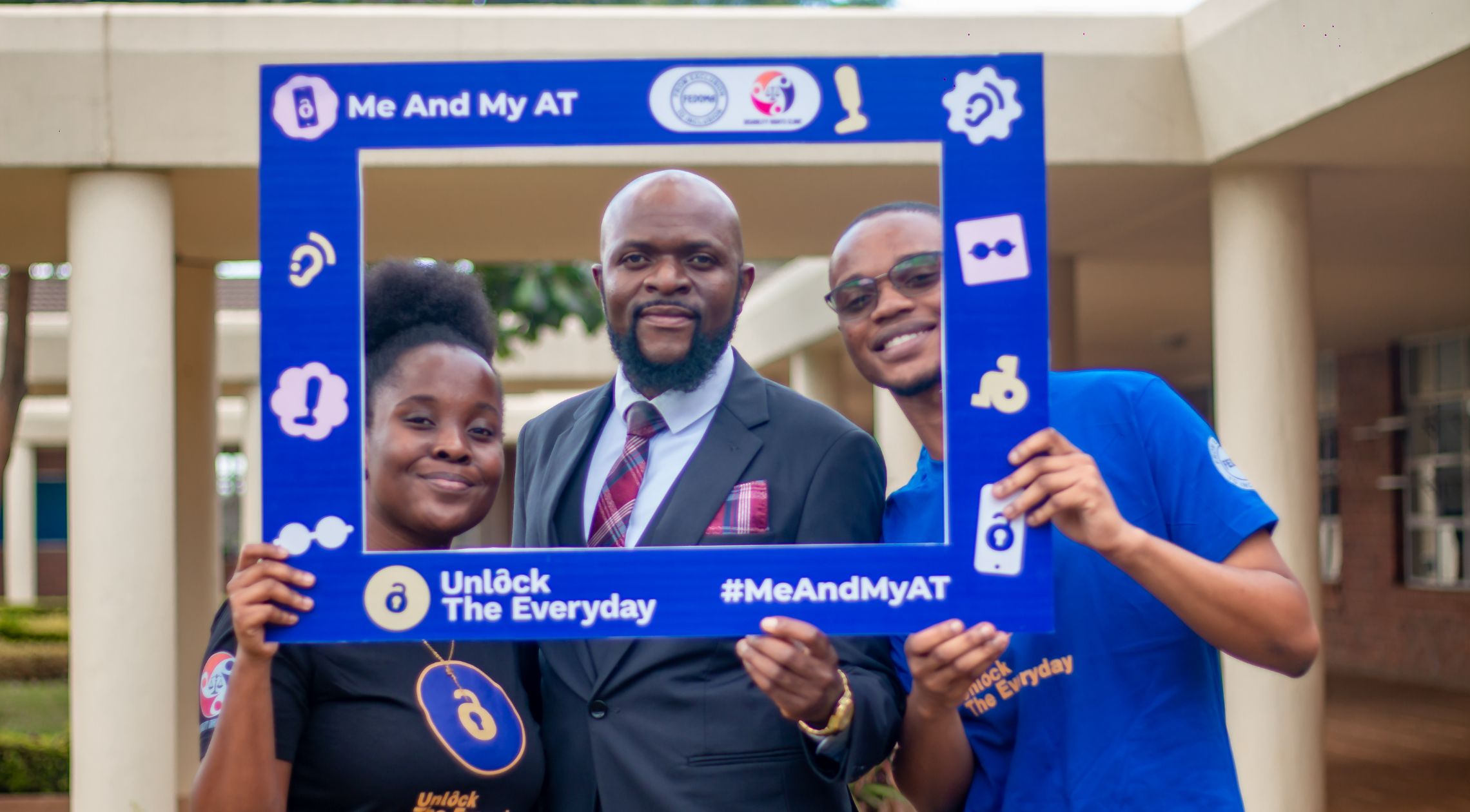
On 4 June 2026, five countries in Southern Africa marked World Assistive Technology Day in five different ways. Botswana ran races in a stadium. Zambia held a stakeholder breakfast. Lesotho held a national dialogue. Malawi held a legal symposium. South Africa followed a week later with a breakfast in Johannesburg. One regional body linked all five: the Southern Africa Federation of the Disabled (SAFOD). This analysis looks at what SAFOD assistive technology work has achieved so far, and where the evidence still falls short.
SAFOD Assistive Technology Campaign: A Bold Regional Push
Unlock the Everyday calls itself the first ever global campaign on assistive technology. It launched in Davos during the World Economic Forum. Its main fact is stark. In low-income countries, only 10% of people have the assistive technology they need. In high-income countries, the figure is 90%.
The scale is large. ATscale reports that 2.5 billion people need at least one assistive product, yet nearly one billion lack access. Wheelchairs, glasses, hearing aids and artificial limbs top the list of missing tools.
In Southern Africa, the SAFOD assistive technology advocacy leads the campaign. Its campaign website says the work runs across eight countries: Malawi, Zimbabwe, Namibia, Eswatini, South Africa, Botswana, Zambia and Lesotho. UNOPS and ATscale, the Global Partnership for Assistive Technology, provide the funding. For 2026, ATscale named SAFOD as one of three organisations leading regional efforts, alongside groups in Asia and Latin America.
None of this started in 2026. In 2025, SAFOD worked with ten organisations of persons with disabilities in eight countries to run a three-month awareness drive. Earlier still, SAFOD built the AT-Info-Map project, a mobile app and database that helps people find assistive product suppliers across ten countries. Google.org funded the first phase. The project now lives on at atinfomap.org.
The pattern is clear. SAFOD sets the frame and supplies support. National disability federations then host the events and choose the local focus. That choice matters, because each country faces a different gap.
The campaign also lands at a good time. ATscale and SAFOD have called the recent UN resolution a landmark win, as our earlier article on the UN resolution on assistive technology explains. Local events like those in June give that global promise a test on the ground.
Malawi Context: Strong Laws, Painful Gaps
Malawi is the clearest case of a country with good law and thin delivery. Any fair reading of SAFOD assistive technology work there starts with this background.
President Lazarus Chakwera signed the Persons with Disabilities Act in February 2024, and it took effect that April. A National Disability Policy followed in 2025. Malawi Spotlight reports that the Human Rights Commission sees both as real wins. Yet advocates keep returning to one point. The laws exist, but the money to make them work does not.
Where the money falls short
The numbers are blunt. Government spending on disability programmes fell to about 0.15% of total spending in 2024/25, down from 0.19% the year before. The Disability Trust Fund took in more than MK375 million between 2019/20 and 2022/23. Reports say it paid out none of it. At the Malawi Council for Disability Affairs, about 80% of the 2024/25 budget went on staff costs.
Elizabeth Machinjiri, who lives with albinism, told a May 2026 consultation that these provisions “exist only on paper.” Mapopa Mgombera Shaba, chairperson of the Federation of Disability Organisations in Malawi (FEDOMA), said the group was not impressed with how rights were moving. His complaint covered hiring most of all.
Children left behind
The gap starts early. The Child Rights Information and Documentation Centre reports that 5.6% of children aged five to seventeen lived with a disability in the 2018 census. That is up from 2.4% a decade earlier. Yet these children make up only 3.3% of primary school enrolment and 2.2% of secondary enrolment. They also drop out more often: 15.7% against 13.2% for other children.
Assistive devices are scarce too. The same source says only 4.5% of persons with disabilities in Malawi have access to a device such as a wheelchair, hearing aid or white cane. Against that backdrop, the June events in Malawi carried weight.
SAFOD Assistive Technology in Malawi: Law, Money and Repairs
Legal gaps under the microscope
On 4 June, FEDOMA and the University of Malawi’s Disability Rights Clinic joined the SAFOD assistive technology campaign by holding a symposium in Zomba with SAFOD support. The theme was “Assistive Technologies for a Dignified Life for Persons With Disabilities.” The guest list included the Director General of the Malawi Council for Disability Affairs, Mr Ellias Hausi, and a representative of the communications regulator, MACRA.
The clinic’s main presentation, according to the campaign report, tested Malawi against three standards. These were the UN disability convention, the African Disability Protocol and the World Health Organization’s assistive technology framework. It praised Malawi for removing import duties and domestic taxes on assistive products. It also named four weaknesses. The law does not clearly protect a person’s right to choose a device. No accessibility standards guide public buying of assistive products. Assistive technology is not yet part of primary healthcare. Malawi also has no measurable targets for putting its policies to work.
The fixes were clear. Recognise assistive technology as a legal right. Set aside dedicated money in the national budget. Offer tax incentives for local makers of assistive devices.
Turnout fell short of the target because the event fell in a holiday period. The organisers said so openly, which adds to the report’s credibility. Radio, television, newspapers and a Facebook livestream still carried the story beyond the room.
Beyond donations: keeping devices alive
The sharpest argument came a week later in the wake of the SAFOD assistive technology campaign. In a Weekend Nation interview, reported on the campaign site, disability policy expert Dr George Kayange argued that donated devices are not enough. His doctoral research found that 73% of surveyed stakeholders saw a gap between policy and practice. It also found that five in six mobility device users got no training on using or caring for their equipment.
Donors like to fund wheelchairs because the count is easy to show. Repairs are harder to see, so they go unfunded. When a device breaks, he said, the user often has no one to call. The device is dropped, and both the money and the mobility are lost.
Dr Kayange proposed three steps. Every assistive technology funding programme should reserve at least 30% of its budget for support after handover. The Ministry of Health should add assistive technology training for Health Surveillance Assistants. Malawi should back local makers such as Malawi Against Physical Disabilities and build career paths for repair technicians. He also pointed to Beyond Suncare, which trains over 2,000 community health workers, and to district repair hubs in Rwanda and Kenya.
He welcomed Parliament’s move to lift the Disability Trust Fund from K500 million to K2 billion. He argued that K10 billion would be a more realistic starting level. The fund’s history of unspent money makes his point sharper. Bigger budgets only help if the cash reaches users.
For more on the research behind this view, see the doctoral thesis on assistive technology ecosystems in Southern Africa.
Botswana: Sport and Mall Outreach Make Access Visible
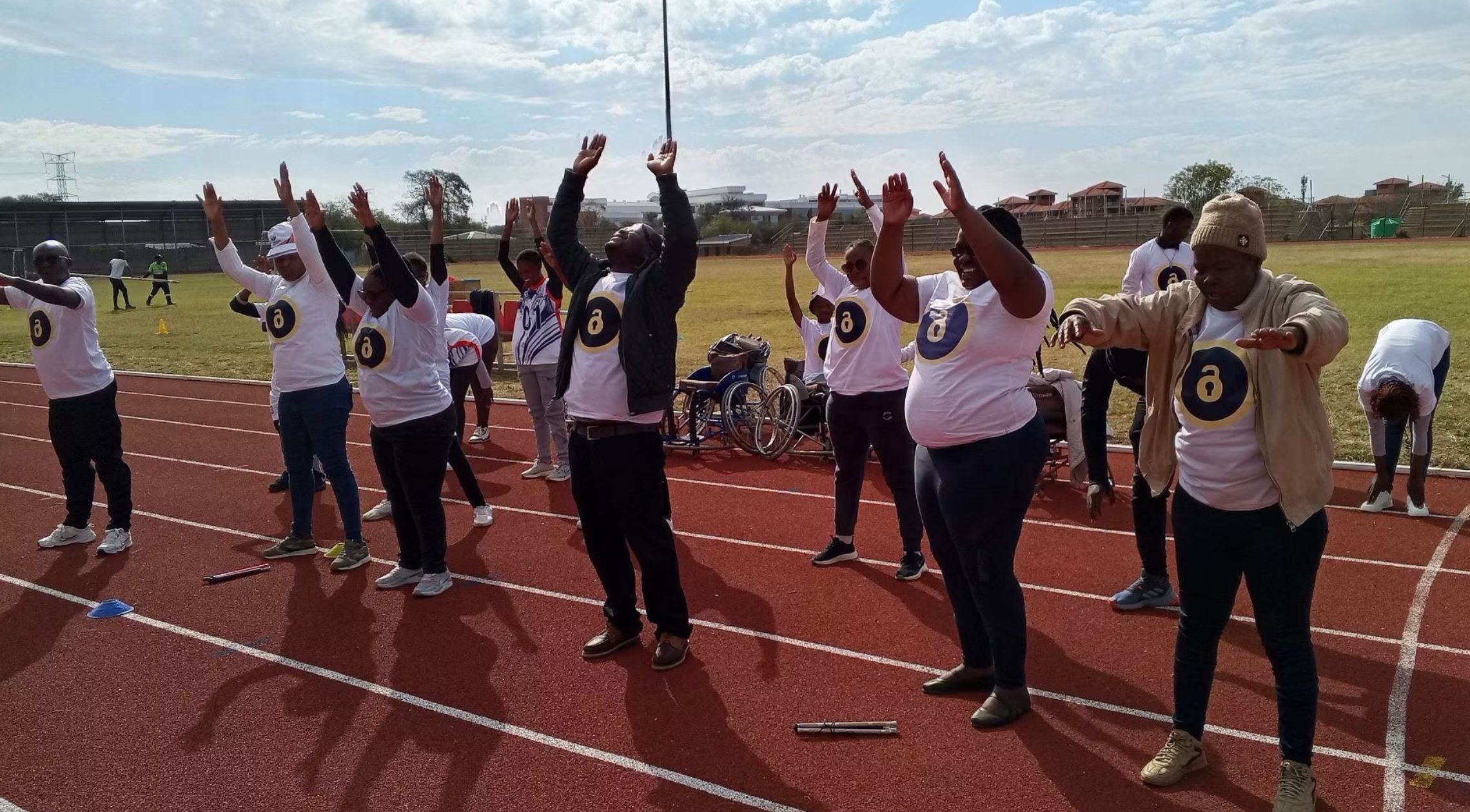
Botswana chose action over speeches. The Botswana Federation of the Disabled (BOFOD) and the University of Botswana hosted the day at the University of Botswana Stadium and Game City Mall in Gaborone, as the campaign report describes.
Dr Pansiri opened by thanking partners: “What can we do without partners.” She then told how support from the university’s Disability Support Services kept her doctoral studies alive despite chronic back pain. Athletes followed with wheelchair races, guided runs for partially sighted athletes and mixed relay teams. A dropped baton meant the whole team reset together. Spectators cheered the smoothest handovers as loudly as the fastest times.
An exhibition let visitors feel Braille for the first time and try manual and motorised wheelchairs. In the afternoon, stalls from SAFOD, BOFOD and other groups moved to the mall. A security guard tried a white cane and spoke about the fear of moving without sight. A mother asked about seating support for her child with cerebral palsy. Small talks like these reach people who never attend a policy meeting. That is a real strength of this SAFOD assistive technology approach.
Zambia, Lesotho and Johannesburg: Local Voices, Shared Demands
Zambia: cost comes first
The Zambia Federation of Disability Organisations and YADIZ held a breakfast at the ZAFOD Secretariat in Lusaka. Officials, researchers, journalists and device users attended. The campaign post says cost was the most pressing concern. Participants also raised supply, access and upkeep. They asked what government policies exist and how they work in practice. Recommendations followed: more investment, lower prices, stronger repair systems, wider awareness and support for policy delivery.
Lesotho: building skills at home
Lesotho’s national dialogue offered the most concrete plan. The Lesotho National Federation of Organisations of the Disabled led it with government, the Disability Advisory Council, the NGO council and Vodacom Foundation Lesotho. The campaign report lists real progress. Lesotho now has a National Priority Assistive Products List and a National Assistive Technology Policy and Strategy. Physiotherapy Outreach Programme staff build low-cost standing frames and desks from recycled cardboard. Four schools received learning aids in a pilot.
The gaps are familiar. Funding is low, local skills are thin and imports push up costs. So stakeholders agreed to draft a roadmap that adds assistive technology repair and making to vocational college courses. Minister Pitso Lesaoana backed local production. The Tribune also covered the event, noting that the government admits people with albinism, wheelchair users and people with hearing loss still lack devices.
Johannesburg: stories that prove the point
On 11 June, THISABILITY Newspaper and Disabled People South Africa hosted 29 guests at The Bannister Hotel. Two sign language practitioners worked throughout, as the campaign report notes. Four speakers shared their own journeys. Thabiso Molopo described bionic prosthetics worth over R2 million, which he obtained at no personal cost. Palesa Mosiea gained telescopic glasses that let her drive her own car. Abongile Xhantini called her guide dog her superhero.
The Facebook livestream drew 691 views from 413 viewers. Those stories carry a clear lesson. The technology exists. The hard part is getting the right device to the right person.
The Real SAFOD Assistive Technology Impact in Southern Africa
What worked
Four results stand out. First, SAFOD turned one global message into five local conversations. Each country picked its own focus: sport, cost, skills, law and user stories. That fit matters more than a single script.
Second, the events pulled decision-makers into the room. Officials from Malawi, Zambia and Lesotho heard demands from users face to face. A minister in Lesotho backed local production in public.
Third, the events produced concrete asks. Malawi wants a legal right to choose a device and 30% of funding reserved for after-sales support. Lesotho wants college courses in repair and making. Zambia wants lower prices and better repair systems. Local making and repair appear in all three.
Fourth, the campaign reached beyond the usual crowd. Livestreams, radio, television and a shopping mall put assistive technology in front of people who rarely meet the topic.
What the evidence cannot yet show
The record has limits. The reports count events, speakers and views. They do not yet show devices delivered, repairs made or policies changed. Malawi’s turnout fell short. Pledges from Lesotho’s leaders are still pledges. Most reports are also written by the campaign itself.
Malawi’s budget figures add a warning. A funding rise to K2 billion helps only if money reaches users, which the Trust Fund’s past makes uncertain. Fair judgement means tracking what happens after the speeches.
What Comes Next for SAFOD Assistive Technology Advocacy
The next test is follow-through. Lesotho’s college roadmap, Malawi’s push for a legal right and Zambia’s call for repair systems all need steady pressure. Funders can help by paying for maintenance and training, not only for new devices.
A bigger stage is coming. ATscale says Senegal will host the first AT Expo Africa from 3 to 5 June 2027. SAFOD and its partners can bring these five stories there, with results to show. Readers who want to follow the wider field can also learn about why the AT Innovation Wiki exists.
SAFOD assistive technology work has opened doors in eight countries. The next phase must prove that devices keep working, budgets reach users and laws become practice.