
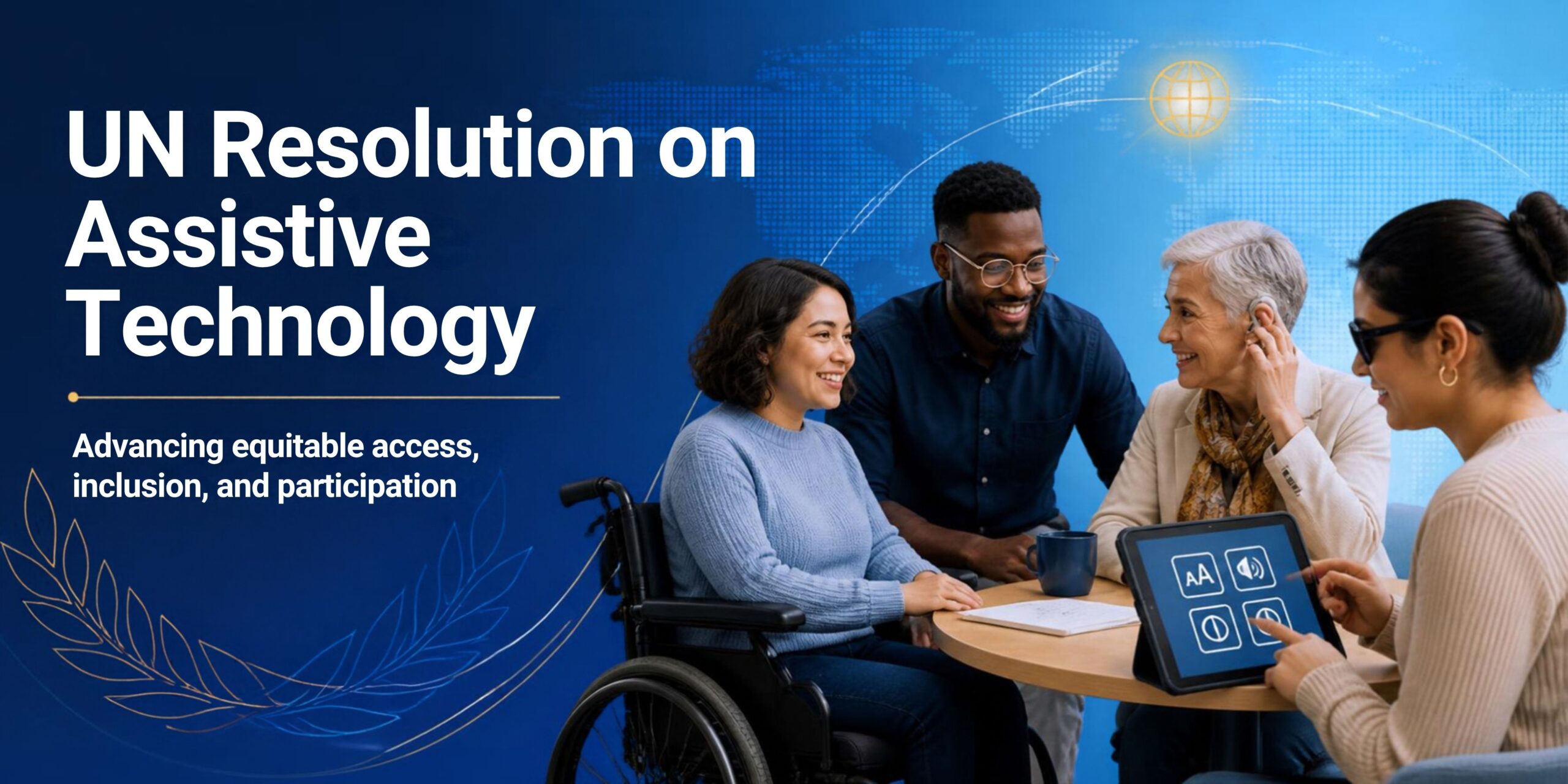
The United Nations has never before dedicated a resolution solely to assistive technology. That changed on 2 September 2026, when the General Assembly adopted the UN resolution on assistive technology by consensus, formally numbered A/RES/80/110 and titled Access to Assistive Technology.
Pakistan led the effort. Counsellor Saima Saleem, Pakistan’s first visually impaired career diplomat, drafted and negotiated the text herself, drawing on her own experience of using assistive devices. More than 40 countries signed on as co-sponsors before the final vote.
For the estimated 2.5 billion people worldwide who need a wheelchair, hearing aid, prosthetic limb or communication device, this is more than diplomatic language. It is a signal that governments, at the highest level, now treat assistive technology as a right rather than a favour.
This article looks at what the resolution says and why the numbers behind it are so stark. It also looks at what the resolution means for ATscale, the Global Partnership for Assistive Technology. And for the Southern Africa Federation of the Disabled (SAFOD), whose #UnlockTheEveryday campaign has pushed this case for years.
What the UN Resolution on Assistive Technology Actually Says
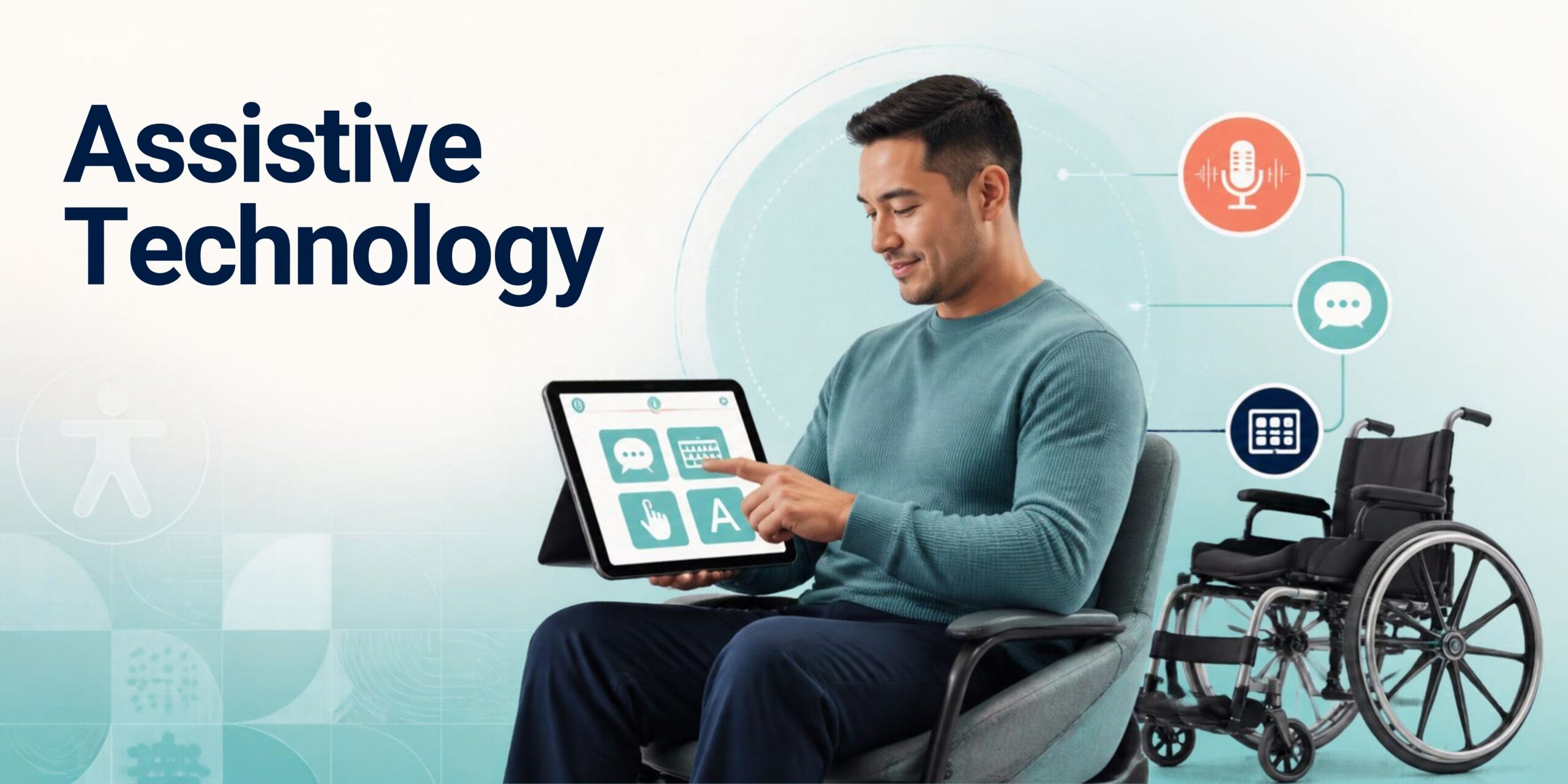
The UN resolution on assistive technology’s official title is plain: Access to Assistive Technology. Its message is not.
It states, without qualification, that assistive technology is a matter of human rights, health and dignity, not an optional extra for wealthier nations. That framing runs through all nine of its operative paragraphs.
Key Provisions of the UN Resolution on Assistive Technology
Ambassador Asim Iftikhar Ahmad, Pakistan’s Permanent Representative to the UN, summed up its practical effect. He said the text for the UN resolution on assistive technology “calls for sustainable access to quality and affordable assistive technology; encourages national strategies and priority assistive-products lists; promotes research, innovation, stronger data and appropriate procurement systems; and emphasises the meaningful participation of those who use and benefit from assistive technology.”
In practice, the resolution asks UN member states to do six things.
- Build national strategies and action plans that bring health, education, employment and social protection systems together.
- Draw up national priority assistive products lists, suited to local needs and resources.
- Fund research and innovation in assistive technology, favouring efficient, homegrown approaches.
- Collect proper data on who needs assistive technology, and who can and cannot get it.
- Involve people with disabilities and older people directly in decisions about the policies that affect them.
- Build assistive technology into disaster and conflict response planning, not just everyday health systems.
It also asks the UN Secretary-General to track how well all of this is put into practice. It calls on international donors and financial institutions to help fund it, particularly in lower-income countries.
Who Backed the Resolution
The text passed by consensus, meaning no country objected outright. Co-sponsors ran to more than 40 states, among them Bangladesh, China, Egypt, Ghana, Indonesia, Japan, Nigeria, Qatar, Rwanda and Sri Lanka.
Not every delegation signed on to the UN resolution on assistive technology without reservation. Speaking on behalf of the EU and 27 member states, Ireland’s mission to the UN said it “regret[ted] the removal of references to the World Health Organization and the weakening of the language on universal health coverage.” It also stressed that “technology transfer can only be undertaken on a voluntary basis and on mutually agreed terms.”
Those caveats matter for anyone tracking implementation, but they did not stop the resolution passing. The full text of A/RES/80/110 is now on the UN’s official record, in all six UN languages.
Why the UN Resolution on Assistive Technology Matters Now
Numbers explain the urgency behind this vote better than any speech.
The World Health Organization says more than 2.5 billion people need at least one assistive product today. That figure is expected to reach 3.5 billion by 2050, as populations age. The data comes from the 2022 WHO-UNICEF Global Report on Assistive Technology, the same study cited directly in the resolution’s own preamble.
WHO has been building this case for years. Its 2021 Policy Brief: Access to Assistive Technology set out a “people-centred” framework built on four pillars: policy, products, personnel and provision. The UN resolution’s call for human-centred assistive technology systems draws directly on that thinking.
The access gap is where the real story sits. WHO reports that “as few as 3% of people in some low-income countries were reported to have access to the assistive products they need, in comparison to 90% in some high-income countries.” The resolution echoes a near-identical figure, pointing to barriers that are financial and social, including negative attitudes towards disability.
Wheelchairs illustrate the gap well. Of the 80 million people worldwide who need one, only 5% to 35% have access, depending on where they live. Hearing aid production meets less than 10% of global demand, against a backdrop of 1.5 billion people living with some form of hearing loss.
Children carry a heavy share of this burden. Gopal Mitra, UNICEF’s Global Lead on Children with Disabilities, put it simply in comments reported by the Global Disability Innovation Hub: “For children who need them, these products and related services are critical to their development, education, and participation.”
None of this is abstract for a family without a wheelchair, a hearing aid or a pair of glasses. Every missing device is a missed school day, a missed job, a missed conversation. The UN resolution on assistive technology exists to close that gap, one national policy at a time.
A Victory for ATscale and the Global Partnership for Assistive Technology
Few organisations have pushed harder for this outcome – a UN resolution on assistive technology than ATscale, the Global Partnership for Assistive Technology. It is hosted by UNOPS and backed by donors including the UK’s FCDO and the European Commission. For years, ATscale has built the case for assistive technology as a mainstream development priority, not a niche one.
Its chief executive, Pascal Bijleveld, called the resolution a statement of principle as much as policy. “It affirms that assistive technology is not a luxury; it is a right and an economic necessity,” he said, in remarks carried on ATscale’s own news page.
Professional bodies echoed the reaction. The World Federation of Occupational Therapists described the resolution as recognising assistive technology as “a fundamental right and a key part of health, education, employment and social participation,” calling it “a huge step forward for equity and opportunity worldwide.”
What changes practically? The UN resolution on assistive technology carries no enforcement power of its own. What it gives ATscale, and every partner working alongside it, is something harder to manufacture: a mandate from nearly every government on Earth to treat assistive technology access as unfinished business.
That mandate strengthens ATscale’s hand in donor meetings, national budget talks and future World Health Assembly discussions. It builds on ground Pakistan first broke with World Health Assembly resolution WHA71.8 in 2018, the first global health text to call for stronger assistive technology access.
For a coalition that has often had to explain why assistive technology deserves the same attention as clean water or vaccines, this shift in tone is the real victory.
What This UN Resolution on Assistive Technology Means for Southern Africa
Nowhere is the access gap described above more visible than in Southern Africa. The Southern Africa Federation of the Disabled (SAFOD), a network spanning 16 SADC member states since 1986, has documented the scale of the problem directly.
SAFOD and the AT Campaign for Southern Africa
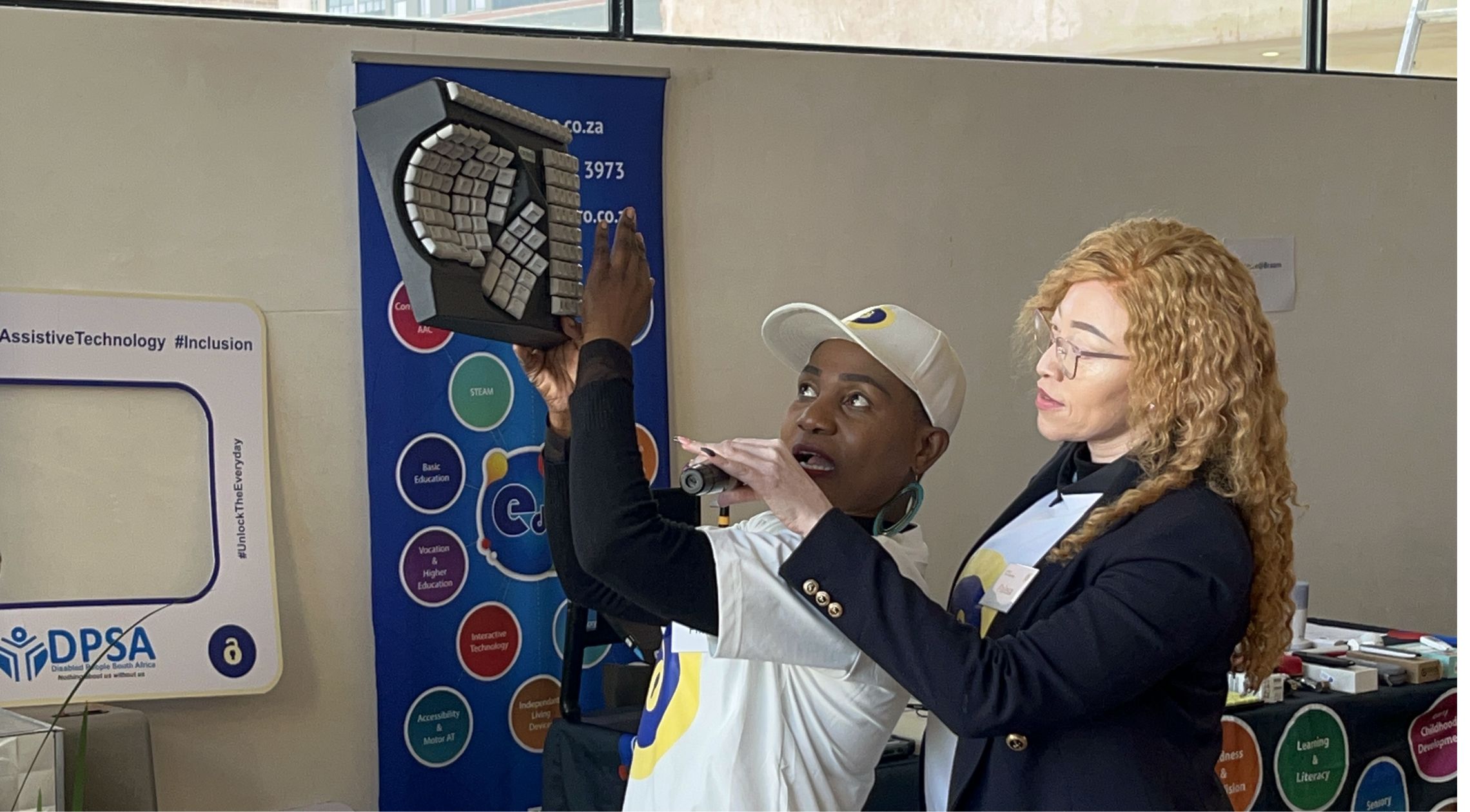
Research shows that up to 95% of people who need assistive technology in Southern Africa cannot access it. That single statistic explains why the organisation runs its #UnlockTheEveryday campaign across more than ten disability organisations in eight Southern African countries, funded by ATscale.
The campaign’s figures show the scale of underinvestment in stark terms. A $700 billion funding gap stands between people in low- and middle-income countries and the assistive technology they need over the next 55 years. Its central message is that assistive technology restores independence and dignity, and unlocks participation in school, work and daily life. That message is now echoed almost word for word in the operative text of A/RES/80/110.
SAFOD has built practical tools alongside the advocacy. Its AT-Info-Map project, developed with Google.org and the University of Washington, maps assistive technology suppliers across ten Southern African countries, turning a policy gap into a searchable, usable resource.
Closing Southern Africa’s Access Gap
The UN resolution on assistive technology gives SAFOD’s regional case a global anchor. When the text urges states to build national priority assistive products lists and coordinated national strategies, it describes, almost precisely, the work SAFOD has already been pressing SADC governments to undertake.
Advocates working across the region, including those using the resources catalogued in the AT Innovation Wiki’s Global Database, now have a UN text to point to in ministry meetings, budget talks and regional forums. A resolution alone will not put a wheelchair into a single village. But it removes the argument, heard for years, that assistive technology is a secondary concern next to other health and development priorities.
From Resolution to Reality: What Happens Next
The UN resolution on assistive technology is the beginning, not the ending. The real test of the UN resolution on assistive technology starts now, inside finance ministries and health departments, not inside the UN building.
The text itself asks the UN Secretary-General to report back on how member states implement it. That work involves UN agencies and direct consultation with disability organisations.
Donors and international financial institutions are named directly too. The resolution calls on them to provide technical and economic assistance so that national efforts can scale. That matters most where government budgets alone cannot close the access gap in the short to medium term.
For organisations such as ATscale and SAFOD, the immediate task is turning broad language into national commitments. That means assistive-products lists, financed strategies, trained personnel and working supply chains.
Progress will not be instant. The EU’s own reservations about weakened references to universal health coverage are a reminder that the text is a compromise, not a perfect document. But for the first time, every UN member state has agreed, on paper, that this problem needs solving.
A Turning Point Worth Building On
Resolutions do not deliver wheelchairs, hearing aids or hope on their own. People, budgets and sustained pressure do that.
What the UN resolution on assistive technology delivers is different but no less important. It is a shared, global admission that 2.5 billion people are still waiting, and that governments now have a duty to act. For ATscale, SAFOD and the #UnlockTheEveryday campaign across Southern Africa, that admission is the new platform for advocacy.
The work SAFOD, ATscale and their partners do next will decide whether this becomes a genuine turning point, or another well-worded document. Given the coalition behind it, the smart wager is on the former.
Sources
- United Nations General Assembly, resolution A/RES/80/110, “Access to Assistive Technology”, adopted 2 September 2026.
- United Nations Digital Library, record for A/RES/80/110.
- ATscale, “UN General Assembly adopts landmark resolution on access to assistive technology”.
- Global Disability Innovation Hub, “UN General Assembly adopts landmark resolution on access to assistive technology”.
- WE News English, “UN General Assembly Adopts Landmark Pakistan-Led Resolution On Assistive Technology”.
- Dawn, “UN adopts Pakistan-led resolution on access to assistive technology”.
- Radio Pakistan, “UNGA adopts Pakistan-led resolution on Access to Assistive Technology”.
- European Union External Action Service, explanation of position on draft resolution L.110.
- World Federation of Occupational Therapists, “UNGA adopts resolution on access to assistive technology”.
- Global Assistive Technology ATconnect, “United Nations General Assembly resolution on Access to Assistive Technology”.
- ShonaquipSE, press release on the UN resolution.
- World Health Organization, “Assistive technology” fact sheet.
- World Health Organization, Policy Brief: Access to Assistive Technology (2021).
- Southern Africa Federation of the Disabled, safod.net.
- #UnlockTheEveryday AT Campaign, at-campaign.site.
- ATscale, the Global Partnership for Assistive Technology, atscalepartnership.org.
- AT Innovation Wiki, Global Database.
